 |
ABC NEWS Saturday, April 18, 2026
By Isabella Michie and Tracey Spring |
|
ABC NEWS Saturday, April 18, 2026
By Isabella Michie and Tracey Spring |
How statue of mythical sex worker 'Joy' celebrates industry
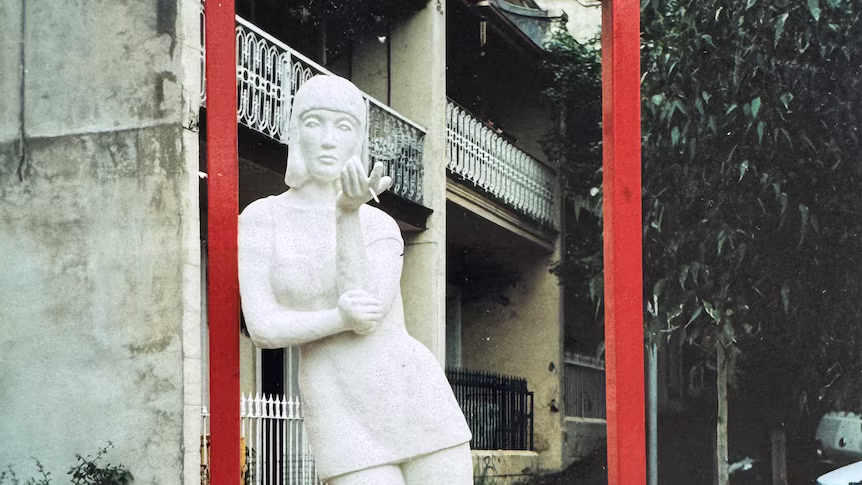
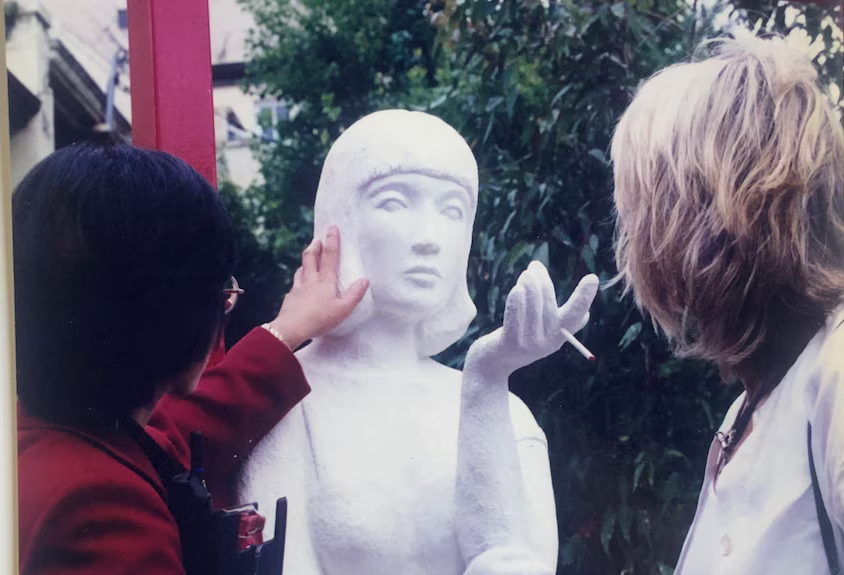
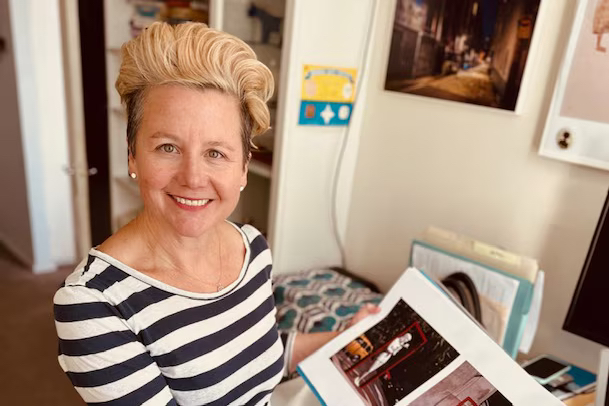
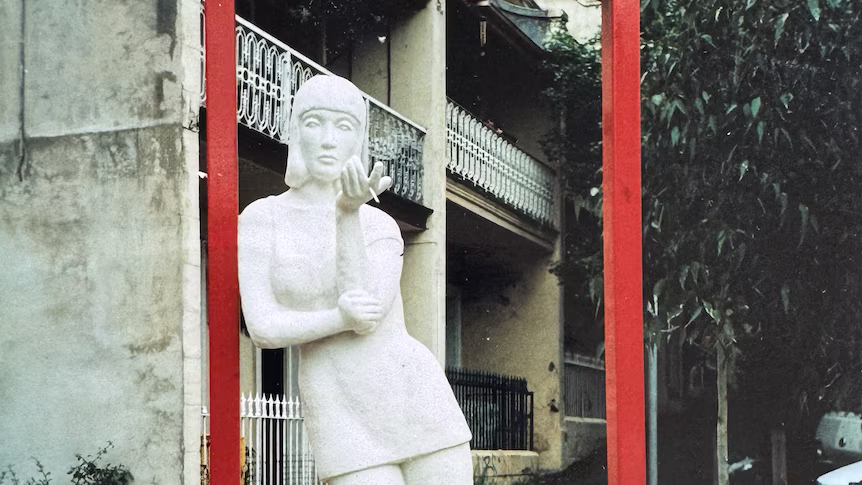
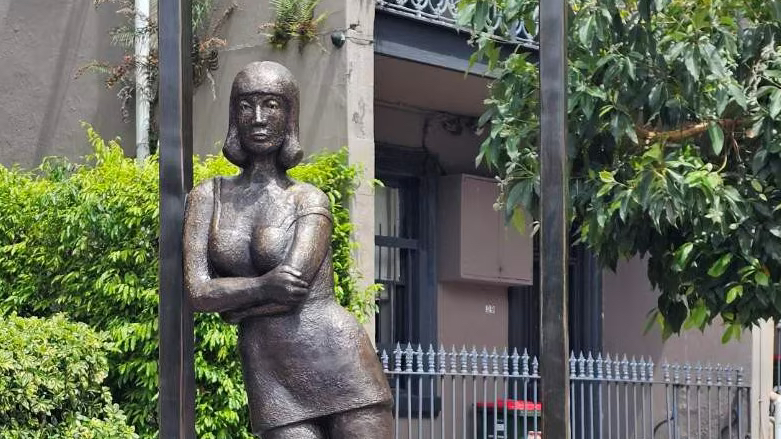
Sexy, strong and dignified are just some of the words to describe Joy, who is thought to be the first statue of a mythical sex worker. In a short dress that shows off her long legs and with cigarette in hand, the woman casually leans against a doorframe. "Joy is the embodiment of every woman who has worked hard to support her family, put food on the table," says Julie Bates, a founding member of the Australian Prostitutes' Collective. "Joy just happens to be a sex worker." Joy was originally installed in 1995 and stood on her plinth until 1997 in Darlinghurst, in Sydney's east.
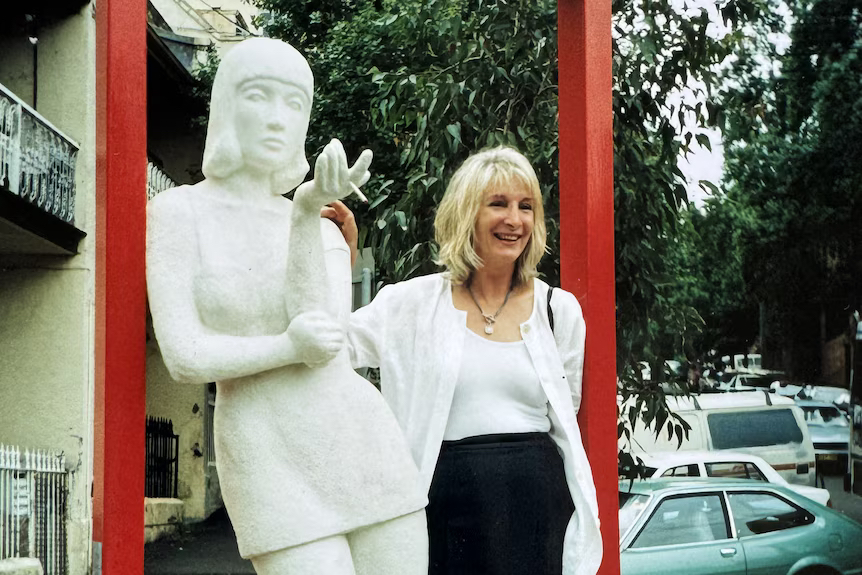
She is a tribute to the working girls of the area and the state's decriminalisation of the industry — a world first. She had many fans but also many critics, including some in the industry. Eventually, Joy was removed from her plinth in 1997 after vandalism and an 18-month campaign by a resident action group. She remained in the care of Macquarie University for 25 years, until the Bring Back Joy campaign, spearheaded by Bates along with historian Catherine Freyne and artist Loui May (née Fraser), successfully achieved her return to Darlinghurst. Women of importanceBates has been on a 24-year-long mission to find Joy and return her to the birthplace of the modern sex worker rights movement. She worked at Nevada, an open-door brothel in the area, and eventually started her own. "I'm a sex worker and I'm pretty proud of it, but you know I did spend many years living in the shame cupboard," she says.
For Bates, Joy is not just a statue but a representation of all the women who guided her in the industry. "She [Joy] symbolises that this work ought to be respected as legitimate and valued work." The first step to tracking down Joy was contacting the artist, Loui May.
For May, the vision of Joy was immediate. "As soon as I saw that podium, the image came to me of this woman in the doorway," said May. During her time studying art at the East Sydney Technical College, now the National Art School, in Darlinghurst, she would often see sex workers on the streets — usually smoking.
In the late 1970s, the Summary Offences Act was repealed by the NSW state government. While brothels were still criminalised, Darlinghurst saw an influx of street-based sex work, said historian Catherine Freyne. By the time of Joy's installation, NSW had become the first jurisdiction in the world to decriminalise sex work completely.
Bates said sex workers played a pivotal role in promoting safe sex during the outbreak of HIV. "We were the cheerleaders of safe sex. We were the ones who were using condoms way before they could be used in brothels because they [brothels] were illegal," she said. Initially, Joy sparked confusion among some of those working in the sex industry. When Chantell Martin, a former sex worker who was working in the area, was told about the statue, she dismissed it. "I said 'I never saw it, you're telling me lies'," she recalled.
In the beginning, she and others questioned why it had been installed. "It's what we do for a living and we cop all the discrimination and stigma on top of that," said Martin. "All of a sudden you're going to put a bloody statue there and really put a target on our back." After taking a stroll to visit Joy with some of her fellow working girls, Martin conceded that Joy was one of them.
Joy was embraced by the sex worker community and inspired the Joy Awards, an annual event that recognised workers who advocated for greater respect of the industry. Lightning rod for controversy Joy ignited great interest within the local community when she was installed but she also had many detractors, said historian Catherine Freyne. "Historically, I think Joy was a lightning rod for controversy," she said.
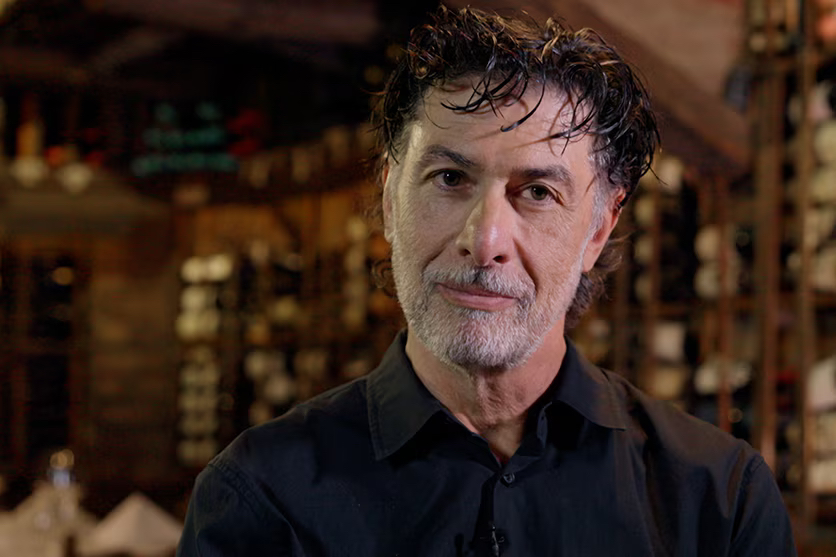
At the time of Joy's installation, Darlinghurst was going through a shift, swapping scandalous strip clubs for upmarket cafes. May believes the local residents were critical of the statue because they didn't want to be reminded of the area's controversial history. Those who opposed the original installation included Beppi Polese who owned Beppi's, the star-studded fine dining restaurant opposite the sculpture.
"My father didn't really like the fact that a statue of a prostitute was put up there," says his son, Marc Polese. "Being old-school, I suppose he thought it was sinful and associated with criminality." The hatred for Joy reached its peak when she was vandalised, leaving damage to her face and hacking off her left hand. Instead of anger, May's response was compassion.
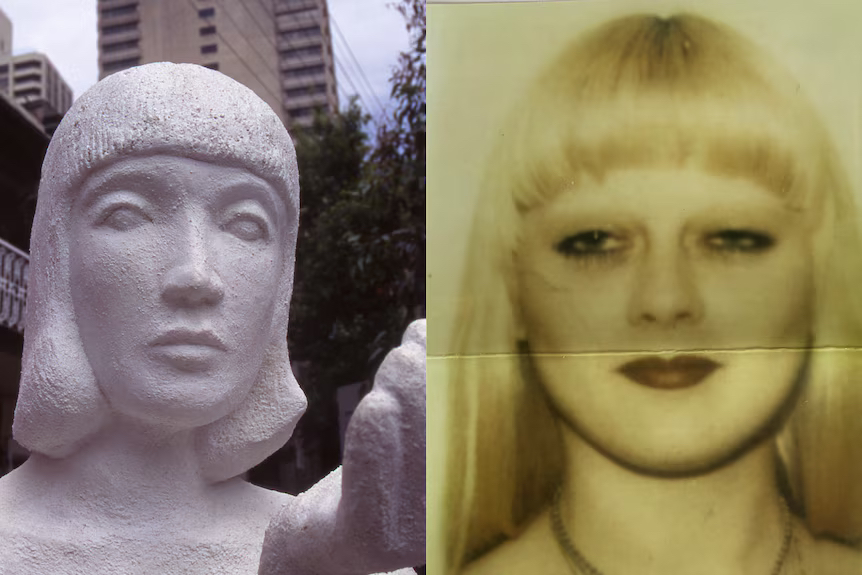
When she went to repair the statue, May was approached by Joy's attacker, who explained her reaction to Joy. A soul reaches out Joy's attacker lived in the terrace house next to the statue and had previously worked in the area as a madam. At the time of the attack, she had recently returned from attending the funeral of her daughter, Lisa, who was also a sex worker. "This woman came out of this terrace house, and she was yelling out, 'When did you see my daughter?'" May recounted. "And I said, 'I have never seen your daughter' and she said, 'You must have, have a look at this'." Joy's attacker showed May a photo of Lisa. From the hairstyle to the shape of her jaw, the statue of Joy had remarkable similarities to her daughter.
After speaking with Joy's attacker, May recalled memories of her original design of Joy. With two weeks to design the sculpture's face and hair, May originally gave her curly hair and a different facial structure. However, when she stood back and surveyed her final work, something wasn't quite right. "It's really difficult for me to explain this; it should have looked alright but it just didn't," said May. Within half an hour, May wiped away Joy's old face, gave her a completely new look — not knowing that it was a mirror to Lisa.
The daughter of Joy's attacker, Lisa, had been in hospital, and eventually, the decision was made to turn off her life support — the same day as May created Joy's new face. "I am not religious at all, all it could make you think of is either it's something like ESP [extrasensory perception] or we have a soul," said May. "And that soul that reached out to me, as she [Lisa] was dying basically. But how does that happen?"
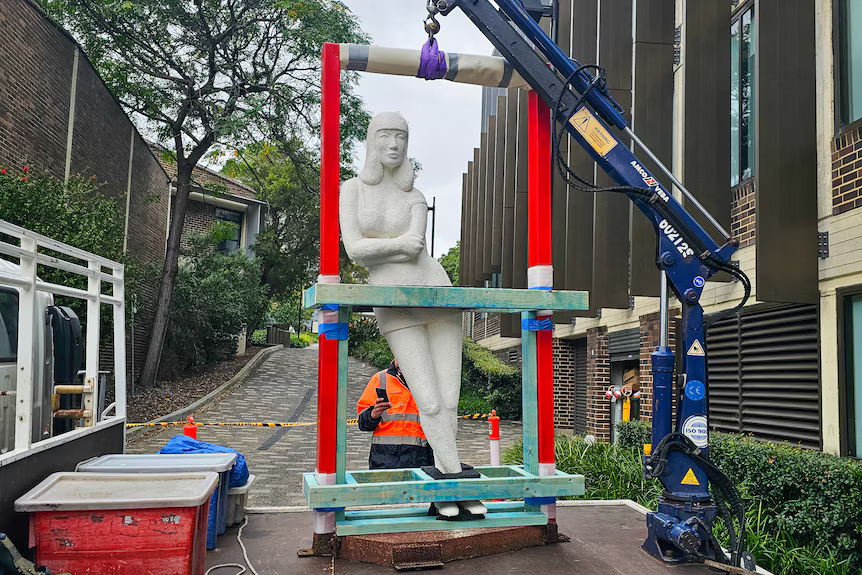
After the vandalism and objections from the local community, Joy was removed and later installed at Macquarie University. Return of Joy Unlike at the time of Joy's installation, the majority of sex work has now moved from the streets to over the phone or online. "By having Joy come back to the area will not increase it [sex work] and make it a red-light area, that happened once upon a time, it won't ever happen again," said former sex worker Chantell Martin. "What we want is: we want the history to be there, and Joy is that history." Former Sydney councillor Linda Scott was an early ally to the Bring Back Joy campaign and resolved to move a motion at council to return the statue to Darlinghurst.
"That's not acceptable." For Scott, Joy represents a movement of bringing women's faces back to Sydney's public art. "Restoring Joy is about bringing the true history of Sydney back to life."
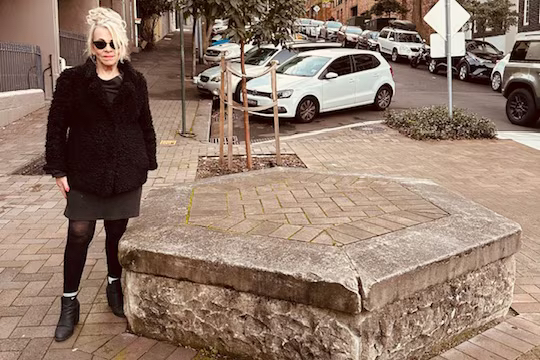
After 30 years away, Joy finally returned to her Stanley Street corner. Instead of using cement and marble dust, this time a replica of Joy was created, cast in bronze to protect her from potential damage. "It [Joy] will last forever," said May. Joy's return has been a personal journey for May after being diagnosed with an inoperable cancer in 2019. "I don't have very much energy anymore. I have a deadline, if you like," she said.
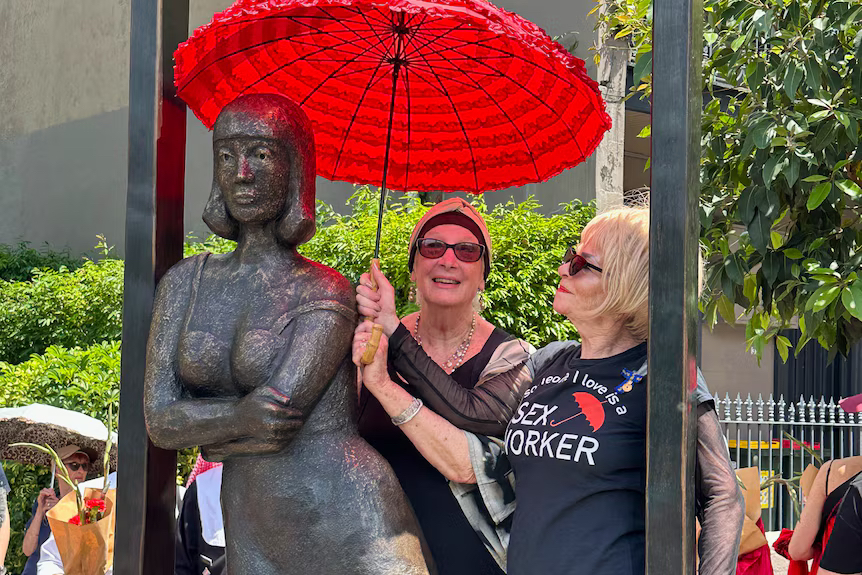
In November 2025, May, along with a crowd of scarlet-clad sex workers and allies to the industry, celebrated a public unveiling of Joy. "To have this happen at this stage of my life — I can't think of anything better," said May. While there had been a lot of advancements for the industry, sex workers still needed anti-discrimination protections, said Bates. "Without that we are still vulnerable … you go to a bank and ask for a loan, even though you've got a long record of savings, but you're a sex worker — forget it," she said. "We might have largely decriminalised the industry, but people can still discriminate against us." Bates believes having a monument to sex workers in a global city like Sydney is an important step in stripping back that discrimination. "Joy will take her place amongst others, in starting to further dismantle pejorative stereotypes." |
| West End Memorial… |
![[World 2026]](world2026crm.gif)
|
![[News by region]](../regioncrm.gif)
|
![[News by topic]](../topiccrm.gif)
|
|
Created: July 4, 2026 Last modified: July 8, 2026 |
 |
Commercial Sex Information Service Box 3075, Vancouver, BC V6B 3X6 Tel: +1 (604) 488-0710 Email: [email protected] |